
Reading time:6 min reads



We are in the business of sharing ideas, but sometimes it can go overboard. How can you tell whether the conference is stealing or sharing?
If you have labored and prepared a groundbreaking presentation with well thought-out insights, carefully researched information and can convey it captivatingly, just to have it stolen and redistributed for free to other people who were not paying attendees can seem like a rip off.
Here are some things you can do to protect your content.
Figure out what you are comfortable sharing:
Communicate with the organizer effectively beforehand
Keep your slides minimal and photo-based
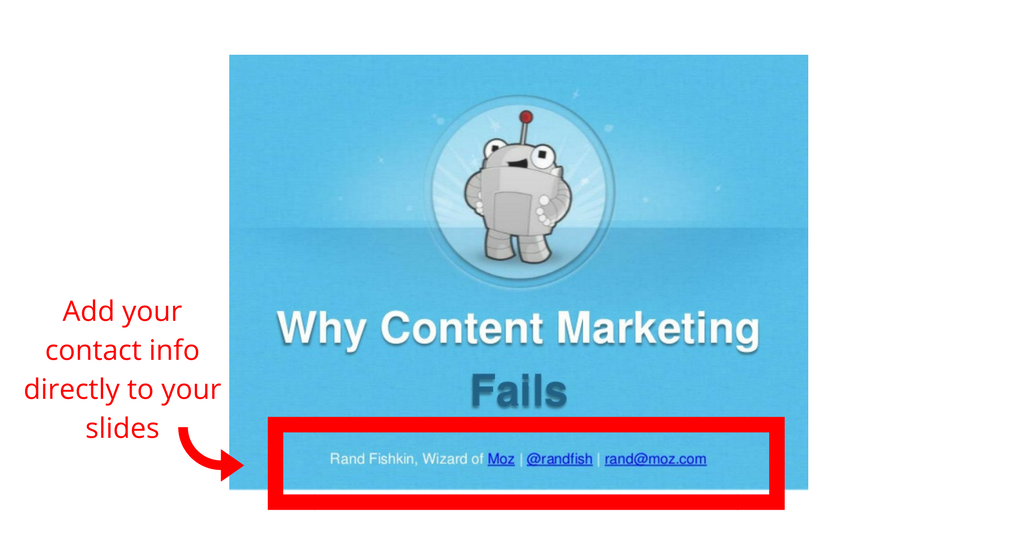
(Image from the Moz.com Presentation, “Why Content Marketing Fails”)
Licence your material out
If someone wants to record your talk, and use it as a future training, they can pay you a license per year to use it.
There are many licensing types online, see them here.
You should also consider the live experience of your talk as being completely different to any recorded or written materials you provide. Let’s switch fields, and take an example from the music industry.
Metallica vs. Radiohead
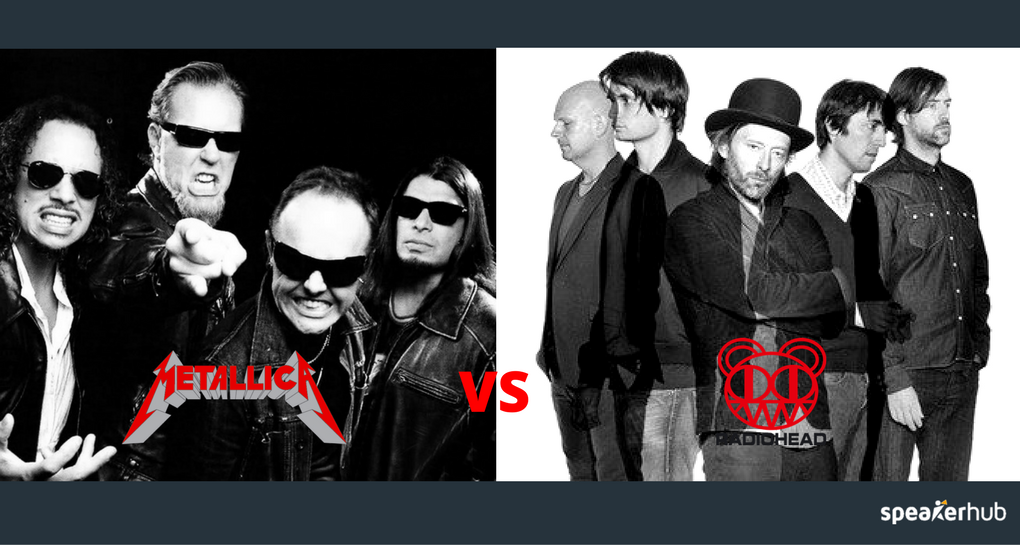
Back in 2000, the rock metal band Metallica entered into a legal war which resulted in the ultimate demise of the music file sharing site Napster. At the time, file sharing was relatively new, and the idea of giving your music away for free was unheard of. Even though they won the case, it outraged many Metallica fans (and music fans in general,) and ended up being a PR nightmare for the band.
Fast forward 7 years, when Radiohead released a digital album in a pay-what-you-want format. Fans could even download the album for free. Essentially, the band leaked their own album, but gave their fans the option of paying if they wanted to. The result? Radiohead not only made massive headlines, but ended up making more money than all of their previous albums combined.
How does this relate to speakers content? It is the idea that in the modern world of sharing, holding too tightly to your content actually does more damage than good.
Content consumers can access almost all their favorite performers online for free.
Think not only about music, but TV shows, movies, even TED Talks. Just because people are consuming the content for free online doesn’t mean they don’t go out and pay for thelive experience. It doesn’t cheapen the live experience but rather heightens it and creates more demand.
Great speakers will get speaking opportunities because of how they make the audience feel when they are on stage, and event organizers will pay top dollar for this. If you know how to work the audience, and you know your material inside out, your schedule will be filled, regardless of whether your work has been shared online or not.
Heightened Visibility
In order to build a brand as a speaker or a trainer, it helps to be very visible and to spread your materials as widely as possible. The more people are aware of you and your work, the greater the cachet for those who can see you live and in-person.
The tighter a grip you keep on your content, the less likely it will be shared. More shares means heightened visibility. The more visibility, the more increased popularity, and ultimately, more higher paid speaking opportunities.
Videos
The average speaker video can cost upwards of $3000. Some speakers even make it a prerequisite that if the conference has a film crew, they will be filmed just to help save on the costs when it comes to developing their speaker reels.
Your speaker videos are one of the best ways to get new clients and speaking opportunities. (Here are a few tips on how to make the perfect speaking video).
Here's what typically happens: someone in the audience sees the presentation, then shares the video with others, once they share it: you are opened up to a whole new audience. The video can lead to more exposure, which in turn, leads to more work.
There are no hard and fast rules when it comes to what you should do with your content
You can speak with other speakers in your field and your mentor, but ultimately, you will have to decide what is best for a given audience, topic and talk.
What has been your experience with sharing, or not sharing, your content?
Has it been massively successful, or have you had negative consequences? We’d love to hear your story. Contact us here.
SpeakerHub would like to acknowledge the various speakers who shared their views on this in the Need a Speaker/Be a Speaker LinkedIn group. Want to join the group? Apply here.
Popular Categories